
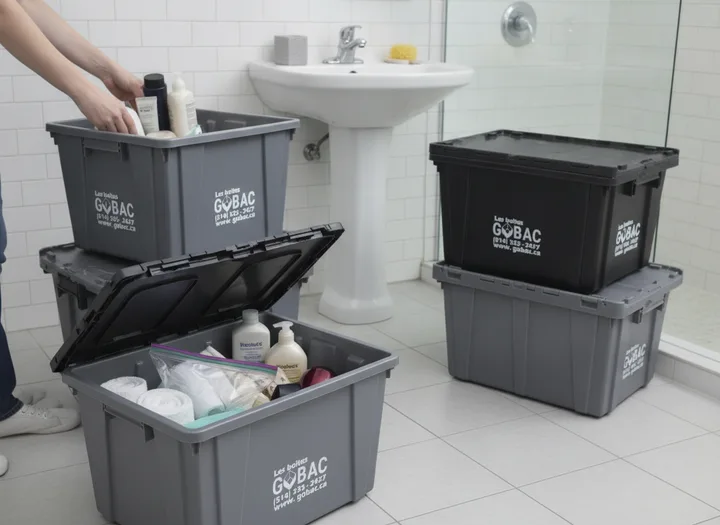
The question comes up on every move, and the honest answer is not "bins, always". Both have a use. What follows compares what actually compares: time, risk and total cost.
Cardboard is paid for twice
The price of an empty box tells you almost nothing. On top of it you pay for tape, for assembly time — one to two minutes per box, so close to two hours for a two-bedroom — and for the end of its life: flattening, hauling out, recycling. A box used once is waste you deal with the following weekend.
What a bin does better
- No assembly. It arrives ready. The lid is attached and cannot get lost.
- It keeps its shape. In the rain, in a damp basement, under the weight of another bin.
- It stacks without crushing. Four full bins hold in a column; four full boxes do not.
- It rolls. One column on a dolly is three trips in one.
- It leaves. Nothing to throw out, nothing to store afterwards.
What cardboard still does well
There is no reason to pretend otherwise. Cardboard is still useful for shapes nothing else fits: a mirror, a framed picture, a tall lamp. It can be cut, wedged and shaped around one specific object. And nobody rents a bin to mail three items.
Compare the service, not the object
This is the real difference. With cardboard you buy, assemble, carry and discard. With bins, they are delivered clean and collected afterwards. An honest comparison puts side by side:
- the price of boxes, tape and paper
- the hours spent assembling and breaking down
- the trips to get them and the trips to get rid of them
- what breaks because a box gave way
In one line
If you are moving a whole home, bins win on time and on risk. If you are packing three fragile, awkward objects, keep some cardboard. Both together is often the right answer.