
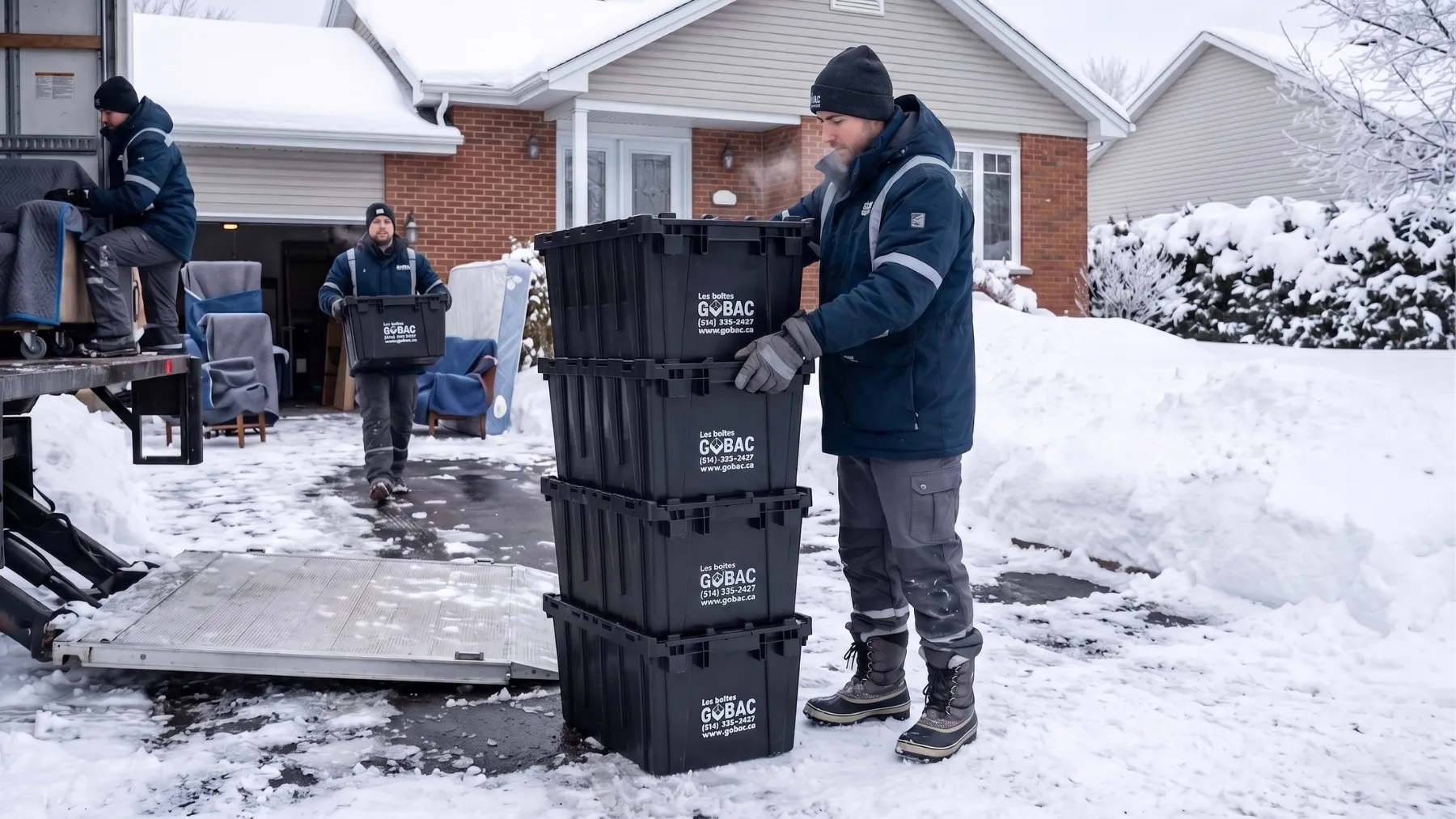
In Montreal you rarely choose your moving date: the lease chooses it. July 1st can be a heat wave, a downpour, or both in one day, and a winter move happens on ice. What follows will not stop the rain; it stops the rain from costing you something.
The real risk is not your things, it is the route
Wet cardboard fails at the bottom, usually above a staircase. But the most common accident on a rainy moving day is not a burst box: it is a fall. Before you carry the first load:
- clear the stairs and the landing completely
- lay cardboard or a tarp along the indoor route, from the doorway to the furthest room
- keep a towel by the door and wipe the bin handles between trips
- in winter, salt or sand before you start, not once it is already slippery
What plastic changes, and what it does not
A rigid bin keeps its shape in a downpour, does not soften, and its lid stays attached. Your belongings arrive dry. But a wet bin is slippery in gloved hands, and a closed lid does not make the load lighter. The equipment solves the problem of the contents, not the problem of the person carrying them.
Load in columns, not in piles
Heaviest bins at the bottom, lightest on top, and never stacked above eye level. Use a dolly as soon as the distance is more than a few metres: three full bins rolling at once is two fewer trips and a spared back.
Never drag a load across ice by pulling it toward you. Push, and keep the load in front of you.
The truck, last
Back the truck up as close as you can and open the doors as late as possible. Every minute the box sits open in the rain is water getting in. Load in tight columns against the walls: what moves in a truck is whatever has room to move.
On arrival
Empty the bins before stacking them. A bin closed on damp belongings smells musty within two days. Stack them empty at the agreed spot and pickup takes a few minutes.